
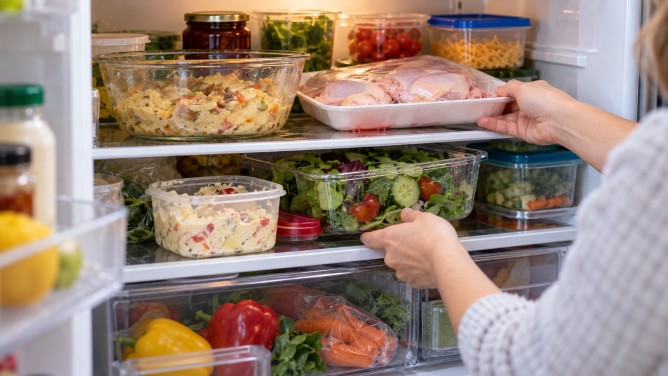
Improper food storage practices can significantly increase the risk of foodborne illnesses, according to food safety guidelines. Key mistakes include leaving cooked food out at room temperature for extended periods, overcrowding the refrigerator, and repeatedly reheating leftovers, all of which can promote bacterial growth.
To mitigate these risks, it’s essential to refrigerate perishable foods within two hours of cooking, or within one hour if the temperature exceeds 32°C. Large quantities of food should be divided into smaller portions and stored in shallow containers to cool quickly. Ensuring that the refrigerator is not overfilled allows for proper air circulation and helps maintain a safe temperature of 4°C or below.
Another critical error is storing raw and cooked foods together, which can lead to cross-contamination. Raw meats, poultry, and seafood should be kept in sealed containers on the lowest refrigerator shelves, separate from ready-to-eat items. Reheating leftovers should be done only once, heating them to at least 74°C, and it is advisable to portion them to avoid warming the same food multiple times.
Washing fruits and vegetables prematurely can introduce excess moisture, leading to spoilage. It is better to wash produce just before use or dry it thoroughly if washed in advance, storing it in clean containers. Additionally, relying solely on smell and appearance to judge food safety can be misleading, as harmful microorganisms may be present even if food seems fresh. Monitoring storage durations and temperatures is crucial to prevent foodborne illnesses.
Particularly sensitive foods, such as milk, cooked rice, and seafood, need careful temperature control, as bacteria can thrive unnoticed. Dry foods like bread and nuts also require proper storage to prevent mould caused by moisture. Maintaining consistent habits—such as prompt refrigeration, correct thawing methods, and mindful reheating—can effectively minimize food safety risks while reducing food waste.