
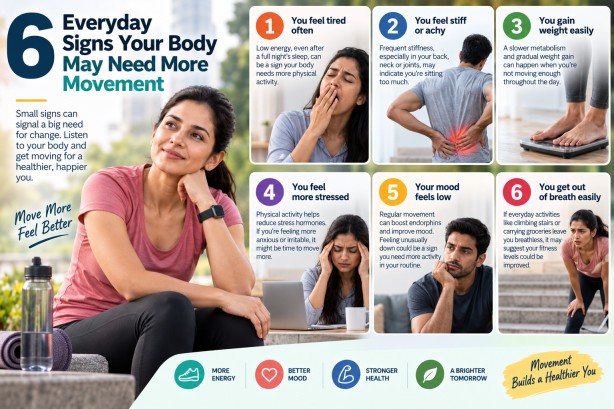
In today’s busy world, it’s easy to overlook the subtle signals our bodies send when movement is lacking. Leading a largely sedentary lifestyle—whether due to long hours at a desk, driving, or simply being inactive—can slowly impact one’s flexibility, strength, balance, and energy. Often, the first indicators are not pain, but subtle signs that emerge during daily activities, hinting at the need for more regular physical activity.
Stiffness after prolonged sitting, whether in the back, hips, shoulders, or legs, is one such sign. Incorporating short movement breaks throughout the day can help maintain joint comfort and prevent the adverse effects of extended inactivity. Similarly, if simple tasks such as climbing stairs or walking short distances leave you unusually tired, it might be time to boost your fitness level. Consistent physical activity can enhance stamina over time, making these everyday activities easier.
Feeling sluggish both physically and mentally is another common consequence of long periods without movement. To combat this, consider short walks, stretching, or quick movement breaks to re-energize and improve alertness. Additionally, if you notice instability in balance—difficulty standing on one leg or navigating stairs, for instance—your coordination may benefit from exercises focused on walking, strength, and balance as part of a routine.
Posture can also suffer from inactivity; if you find yourself slumping at your desk or having difficulty maintaining a comfortable position, weak or underutilized muscles could be to blame. Strengthening the back, legs, and core muscles, along with regular breaks from sitting, can enhance posture and movement. Moreover, if everyday movements like bending, squatting, or rising from a chair become more challenging, it’s important not to dismiss these changes as merely age-related. A lack of regular movement can lead to declining strength and flexibility, but gradually increasing activity can help maintain mobility and independence.
To integrate more movement into your day, extensive gym sessions aren’t necessary. Simple actions such as taking short walking breaks, stretching after sitting, opting for stairs, and incorporating basic strength or balance exercises can be effective. The emphasis should be on consistency—small, regular amounts of movement are often easier to sustain than sporadic, intense workouts. However, if these adjustments are accompanied by persistent symptoms like stiffness, significant weakness, numbness, dizziness, or ongoing pain, consulting a healthcare professional is advisable. Ultimately, recognizing and responding to your body’s early signals for more activity can enhance strength, mobility, energy, and overall wellbeing at any age.