
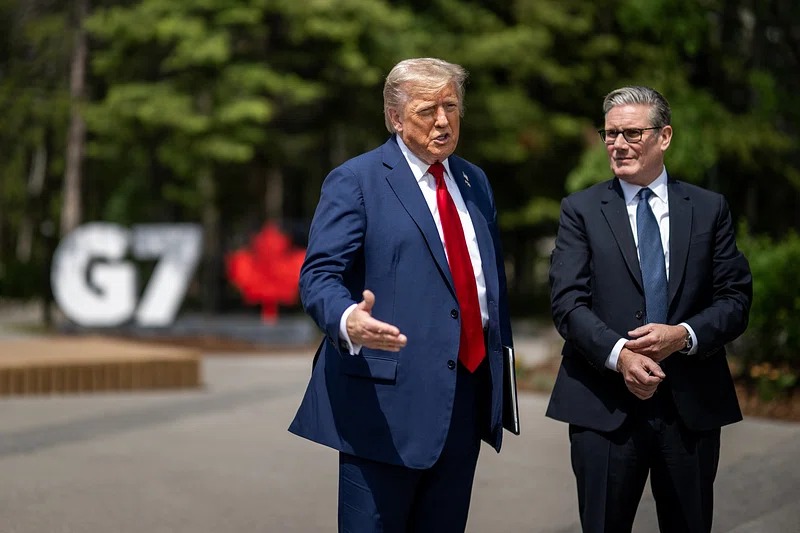
The strikes on Iran have exposed fault lines in the Western security order that had been building for some time. The willingness of countries like Britain and Spain to decline American military requests — even temporarily — reflects a shift in the political landscape of Western democracies that has significant implications for the alliances that have underpinned international security for decades.
In previous eras, the assumption that Western governments would support American military operations was more reliable. The political costs of declining were high, the domestic opposition was manageable, and the ideological convergence between governments on both sides of the Atlantic was greater. Those conditions no longer obtain in the same way.
Britain’s governing Labour Party represents a constituency that is genuinely sceptical of military intervention — particularly in the Middle East, where British involvement has been a source of significant controversy since the Iraq War. The prime minister’s initial hesitation reflected that political reality, rather than personal antipathy toward the United States.
But the American administration’s expectations have not adjusted to reflect those changed political realities. The president’s public criticism and the secretary of state’s pointed remarks at an international conference signalled that Washington continues to expect the kind of prompt, unconditional support that allied governments can increasingly find it difficult to provide.
The gap between American expectations and allied political realities is the fault line that the Iran conflict has exposed. Bridging it — or at least managing it — is one of the central challenges of Western alliance management in the current period.